


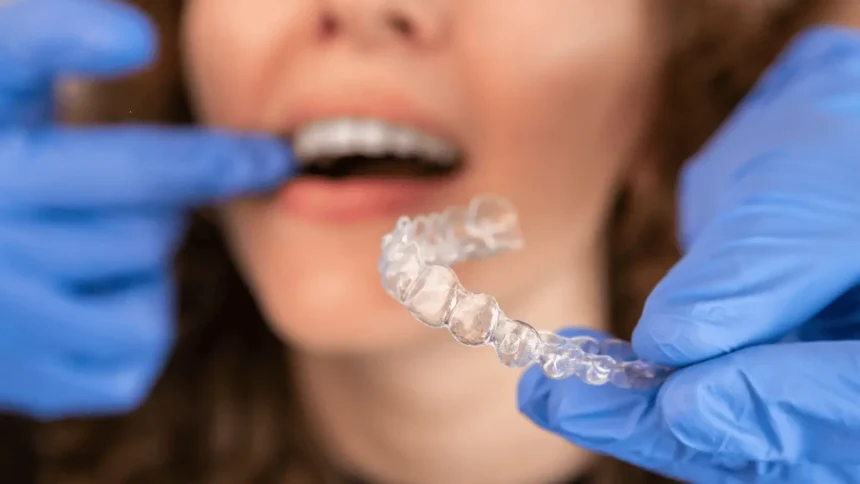
Invisalign aligners are clear plastic trays designed to guide your teeth into the right position over time. To keep them clean and working effectively, daily care is fundamental. Well-maintained trays fit properly and remain discreet, so it’s beneficial to develop a consistent routine. Here are some care tips to help protect your aligners from damage, prevent buildup, and make your treatment as smooth as possible:
Clean the Aligners Every Day
Daily cleaning forms a key part of aligner care. Rinse your aligners each time you remove them; this helps remove saliva and surface buildup before it dries. Keeping up with this habit can maintain the device’s clarity and support your overall care routine.
Use a soft toothbrush and lukewarm water to brush your aligners gently. If approved by your dentist, cleaning with toothpaste also helps remove biofilm. Applying light pressure is key; rough brushing may scratch the trays and create a cloudy appearance. Avoid using excessively hot water. The heat may damage the plastic or change the shape of your trays. If your dental provider suggests a cleaning solution made for aligners, follow those instructions with care. A simple daily routine may be more helpful than waiting for buildup to warrant a deep clean.
Rinse and Store Aligners Safely
Make rinsing your aligners a key habit by doing it right after removal. This practice can keep residue from lingering on the trays, supporting consistent cleanliness and care. Avoid leaving your aligners on a napkin, countertop, or inside a pocket; these spots make it easy to misplace or damage them.
Storing your Invisalign aligners correctly is key to protecting them when you are not wearing them. If given a case by your dental office, place the trays inside each time you remove them. A hard case can provide protection from pressure, dust, and unexpected damage.
Keeping your case in a regular spot, such as in your bag or on a work desk, is another useful strategy, allowing you to stay organized. When you consistently put the case in the same place, you create a routine that helps minimize the chance of misplacing your aligners. Pets may also chew on aligners, so keeping the case out of their reach is key.
Brush and Floss Before Reinserting
Brushing and flossing your teeth before reinserting your aligners promotes good oral hygiene. By removing food particles and debris, you help keep both your teeth and trays clean. This fundamental practice makes sure nothing gets trapped under the aligners; it can support a cleaner, more comfortable experience. If you are away from home, a small dental kit with a toothbrush, toothpaste, and floss proves especially helpful. Having these basics available everywhere you go makes it easier to follow your aligner routine after meals.
Avoid Food and Drinks While Wearing
Eating with your aligners in place may damage the trays, shortening their lifespan. Remove them before meals, snacks, or drinking anything besides water; this is a key step for keeping your aligners clear and intact. Food may scratch and weaken the aligner material, while drinks sometimes leave behind stains or sticky residue. Try to avoid the following beverages while wearing your aligners:
- Coffee
- Tea
- Juice
- Soda
Check Aligners Daily for Damage
Inspect your aligners every day for cracks, rough spots, bending, or persistent cloudiness that does not rinse away. Identifying these issues early is key to keeping your trays in good condition. Make it a habit to check the aligners before and after wearing them. If your aligners stop fitting as expected or show signs of damage, contact your dental provider. Avoid trimming or reshaping the trays yourself; these actions may lead to further complications. By reaching out quickly for guidance, you’re able to receive helpful instructions tailored to your situation.
Learn More About Invisalign Treatment
Keeping your Invisalign aligners in good condition depends on daily cleaning, proper storage, and regular inspection for wear. Building these key habits helps protect your trays, and it supports your overall treatment process. Contact your dentist today to learn more about Invisalign and create a customized treatment plan.