



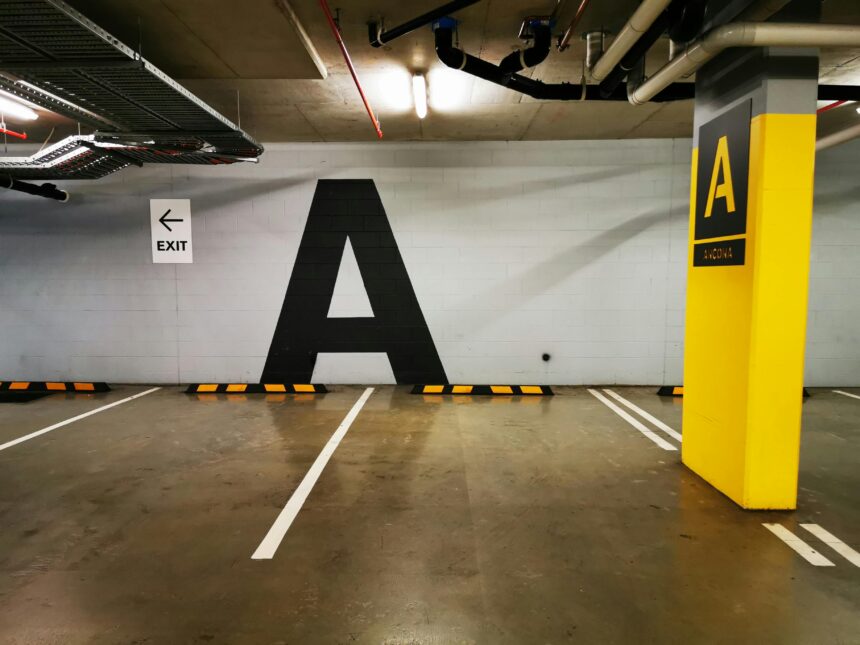
Parking signs provide information about where, when, and for how long a vehicle may park in a particular space. Sometimes, two or more signs are combined when different regulations apply to the same parking spot. When you know how to read the signs correctly, they guide each step from entry to exit, helping to make your navigation more streamlined and controlled. Here are a few tips on how to read parking garage signage effectively:
Read Signs Top to Bottom
Garage signage is often structured hierarchically: general terms are presented first, followed by specific restrictions or exceptions that modify those terms. Early lines typically state standard hours or rates, while lower sections introduce conditions that override them. In multi-level garages, rules vary by floor, so signage on one level may not apply to another. Each sign should be read in full, including all subordinate clauses, since later lines change or limit what is stated above.
Watch for Restricted Zones
Not every parking space in a garage is available to all drivers, and some areas are set aside for specific purposes that are defined on posted signs. Restrictions are communicated through signage that identifies who is able to use a space and under what conditions; ignoring these markings can result in violations. Accessible parking spaces are designated for individuals who require mobility accommodations, and they are typically marked with blue and white signage along with standardized symbols.
Some garages have permit-only sections or spaces assigned to monthly pass holders. Additional controlled areas include loading zones, electric vehicle charging bays, and other designated-use spaces. Each area is governed by posted conditions that vary by location and facility. These categories are not uniform across garages, so the applicable rule set depends on the specific structure you are in.
Time-based restrictions may also apply within the same category of space, depending on operational needs throughout the day. Signs are sometimes placed at angles or locations that are not immediately visible when entering a stall. A brief, deliberate check of nearby postings before parking reduces the chance of missing key terms that are not obvious from a distance.
Follow Directional Arrows
Directional arrows in parking garages function as traffic-control markers. They establish the permitted direction of movement within aisles, and in layouts designed as one-way systems, opposing those directions can place vehicles in conflicting paths where visibility is limited. The same directional system also organizes how movement is coordinated between driving lanes, pedestrian crossings, and entry points to parking stalls. In many facilities, arrows are applied both on overhead or wall-mounted signage and directly on the driving surface through painted markings. Drivers are expected to follow arrows carefully when navigating through the structure.
Check Height Clearances
Height clearance signs often appear at the entry and at key transition points within the garage. They indicate whether your vehicle fits within certain areas, which becomes more relevant as you move deeper into the structure. When you read these signs early, you are able to avoid encountering tight spaces that require you to stop or reverse.
In multi-level garages, clearance varies between floors or ramps. You might pass through one section without issue and then face a lower limit on a different level. Watching for these changes helps you plan your route as you move through different areas.
Navigate Parking Garages Carefully
Garage signage contains multiple pieces of information that guide how parking facilities are used. Each sign adds a layer of instruction that influences movement through the space; careful reading of posted signs helps reduce the chance of parking violations in some situations. It may also support safer navigation within the facility and help reduce time spent searching for parking. Start your search for a safe garage that offers clear signage and parking instructions.