


Orthodontics focuses on correcting the alignment of your teeth and jaw, and they offer solutions for a wide range of dental concerns. These methods are designed to help individuals address misalignments, spacing issues, and bite irregularities. Patients have access to multiple options, including traditional braces, clear aligners, and specific underbite correction protocols. Understanding these options is the first step toward making an informed decision about your oral health. Each treatment plan is tailored to address a person’s unique needs, and orthodontists will guide you through available options.
Orthodontics Consultation
Before beginning any treatment, a comprehensive evaluation is performed. This assessment is significant because it allows the orthodontist to identify any underlying issues that may affect your treatment plan; it typically involves reviewing your dental and medical history to verify that the approach is safe and suitable for your needs. The orthodontics consultation allows a specialist to assess your specific dental structure. This initial visit provides clarity on your current alignment and helps establish a structured care plan.
During your consultation, you can generally expect the following steps:
- Visual examination: The orthodontist will inspect your teeth, jaw, and mouth.
- Diagnostic imaging: Staff will take X-rays and photographs to evaluate the roots of your teeth and the jawbone.
- Treatment discussion: The specialist will outline suitable treatments, estimated timelines, and routine maintenance.
Teeth Straightening Treatments
Misaligned teeth are a common condition that can affect daily routines like chewing and cleaning, and orthodontists use a variety of teeth-straightening treatments to address this. These methods are designed to gradually and safely guide your teeth into their optimal positions for improved function and appearance. Consistent follow-up appointments confirm that your orthodontics progress is monitored. Orthodontists make adjustments as needed.
Traditional Braces
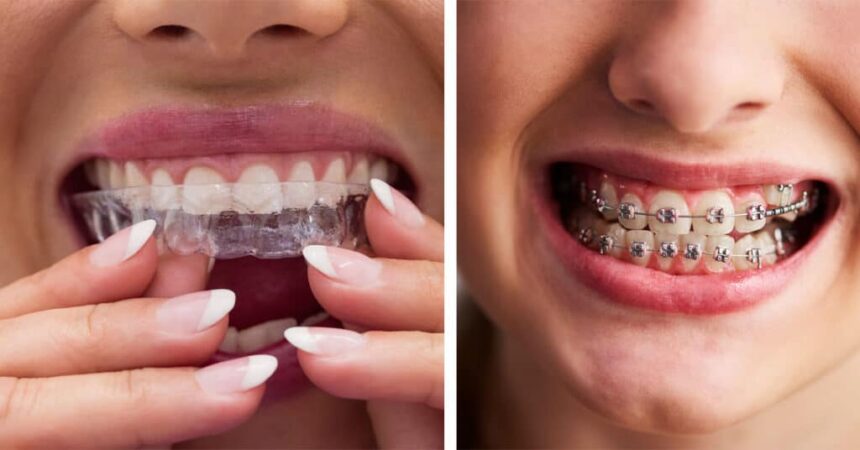
Traditional braces remain one of the most reliable methods for addressing complex dental misalignments. This system utilizes a network of components to apply consistent pressure over time. Traditional braces use metal brackets attached to the teeth, and a continuous wire connects these brackets to facilitate movement. Patients visit their orthodontist periodically to have the wires adjusted. Throughout the process, individuals follow specific guidelines for brushing and flossing around the hardware. Avoiding hard or sticky foods is also recommended to prevent damage to the brackets.
Clear Aligners
Clear aligners offer an alternative approach for individuals seeking a more discreet straightening method. Instead of fixed brackets, this system relies on a series of custom-made, transparent plastic trays. Patients wear each set of trays for a designated period before moving on to the next set in the series. Because aligners are removable, patients can take them out during meals and oral hygiene routines; this feature allows for easier brushing and flossing compared to fixed braces. Providers recommend that the trays remain in the mouth for most of the day to achieve the desired results. Strict adherence to wear time is advisable to confirm that the treatment progresses as planned.
Underbite Treatments
An underbite is a specific dental alignment issue in which the lower front teeth extend outward past the upper front teeth. Early evaluation provides treatment options, and this can make correction simpler for some patients. Specialists evaluate the severity of the underbite to determine the most appropriate intervention. Your orthodontist will explain each step and answer any questions, supporting you through the decision-making process.
For mild to moderate cases, orthodontists utilize specialized appliances. Examples include upper jaw expanders or facemask appliances, which gently encourage proper jaw growth and positioning. Severe cases require structural adjustments to the jawbone, so an orthodontist might recommend corrective jaw surgery.
Talk to an Orthodontist Today
Understanding your options is a key part of achieving your oral health goals. Because every mouth is unique, the most effective approach requires professional guidance; an orthodontist possesses the advanced training needed to evaluate your specific situation and recommend a tailored strategy. Talk to an orthodontist today to discuss your alignment concerns. Explore the orthodontics treatments suited to your needs.